 Our Client Reviews


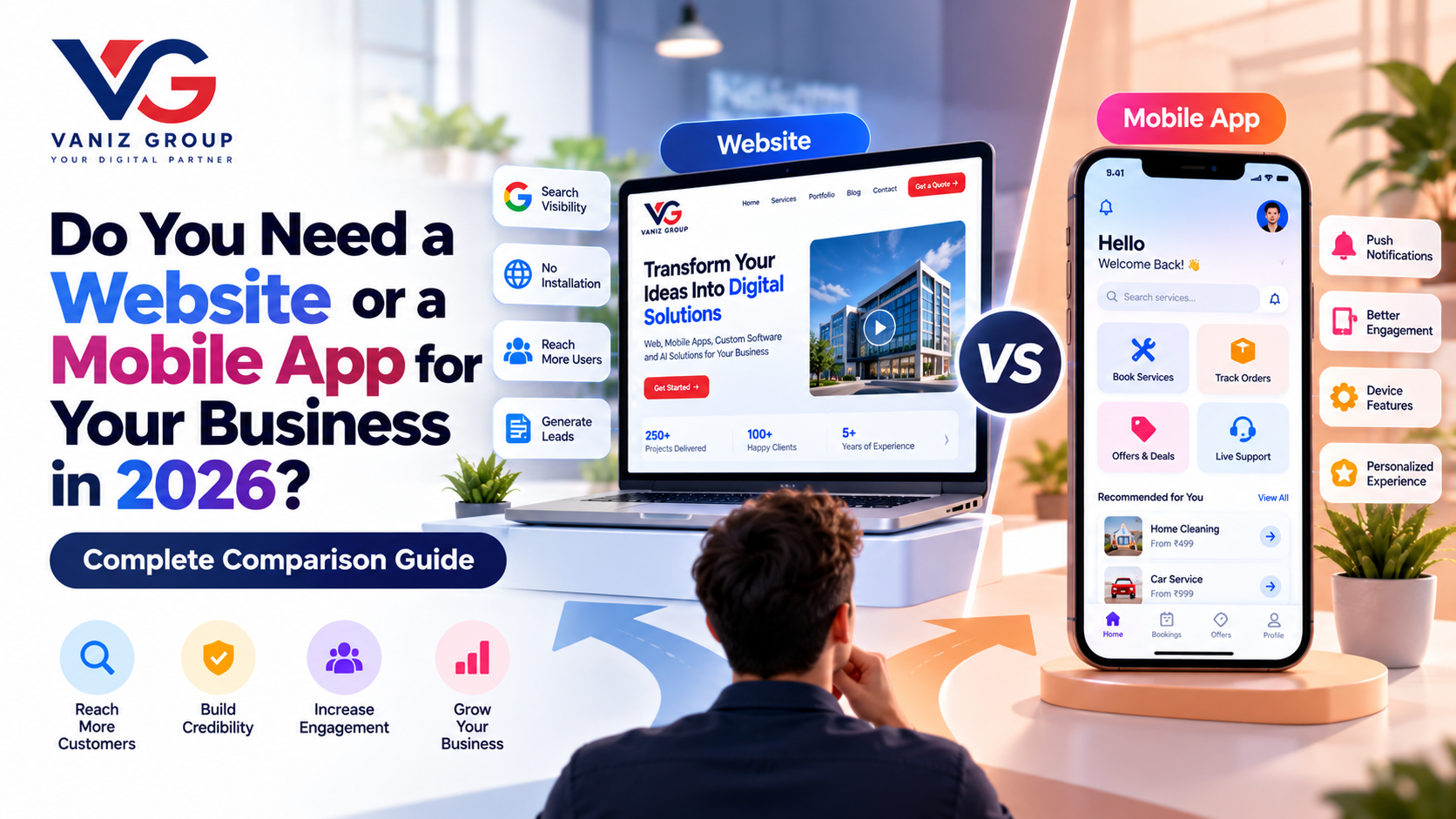
For many businesses, going digital no longer means simply creating a website. Depending on the business model, customers, and growth strategy, a company may benefit from a website, a mobile application, or both.
But which one should you build first?
A website can help your business establish an online presence, attract customers through search engines, generate leads, and provide information about your products or services. A mobile app can offer a more personalized experience, push notifications, loyalty features, location-based services, and stronger customer engagement.
The right choice depends on what you want your digital platform to accomplish.
In this guide, we'll compare websites and mobile apps, explain the advantages of each, discuss when your business needs one or both, compare development costs, and help you decide where to invest first.
Website vs Mobile App: What's the Difference?
A website is accessed through a web browser such as Chrome, Safari, Edge, or Firefox. Users can generally access it from phones, tablets, laptops, and desktops without installing anything.
A mobile app is software installed directly on a smartphone or tablet. It can use device capabilities such as:
Push notifications
GPS
Camera
Biometrics
Bluetooth
Contacts
Local storage
Mobile payments
A website and mobile app can serve similar business purposes, but they provide different experiences.
Feature | Website | Mobile App |
|---|---|---|
Installation | Not required | Required |
Google search visibility | Strong potential | Limited |
Easy first-time access | Excellent | Lower |
Mobile experience | Responsive design required | Highly optimized |
Push notifications | Limited | Excellent |
Device features | Limited | Strong |
Customer engagement | Good | Excellent |
Updates | Usually immediate | App update may be required |
Development complexity | Usually lower | Usually higher |
Best for discovery | Excellent | Moderate |
Best for frequent users | Good | Excellent |
The decision should therefore be based on your business objectives, not simply on which technology is more popular.
Why Does Your Business Need a Website?
For most businesses, a website is the foundation of their digital presence.
1. Reach Customers Through Search
A website gives your business an opportunity to appear in search results when potential customers search for your products, services, or solutions.
For example, a software company can create pages targeting searches such as:
Custom software development
Mobile app development
AI development
Web development
SaaS development
This can help attract visitors who are actively looking for those services.
2. Build Business Credibility
A professional website can provide:
Company information
Services
Products
Portfolio
Case studies
Customer testimonials
Contact information
Blog content
Frequently asked questions
These elements help potential customers understand your business before contacting you.
3. Generate Leads
A website can include:
Contact forms
Quote requests
Consultation forms
WhatsApp integration
Chatbots
Newsletter forms
Appointment booking
This makes the website an important lead-generation tool.
4. Reach Users Without an App Installation
Customers don't need to download anything.
They can simply click a link and access your website.
This is particularly useful for:
New businesses
Service companies
B2B companies
Local businesses
Professional services
Startups validating an idea
Why Does Your Business Need a Mobile App?
A mobile app becomes particularly valuable when customers interact with your business frequently.
1. Better Customer Engagement
Apps can provide a more personalized experience.
Users can have:
Personalized dashboards
Saved preferences
Order history
Recommendations
Favorites
Account information
Personalized content
2. Push Notifications
Push notifications can help businesses communicate directly with customers.
For example:
New product announcements
Order updates
Appointment reminders
Discounts
New content
Booking notifications
Subscription reminders
3. Access to Device Features
Mobile applications can take advantage of smartphone capabilities such as:
GPS
Camera
Microphone
Biometrics
Bluetooth
Location services
Mobile notifications
This makes apps particularly useful for on-demand and location-based businesses.
4. Loyalty and Retention
Apps can support:
Loyalty points
Memberships
Rewards
Personalized offers
Referral programs
Subscription plans
These features can encourage customers to return more frequently.
When Should Your Business Choose a Website?
A website should generally be your first choice when your primary objective is visibility, information, lead generation, or customer acquisition.
A website may be sufficient if you run:
Service Businesses
Examples include:
Software companies
Marketing agencies
Law firms
Accounting firms
Consulting businesses
Construction companies
Professional services
Local Businesses
Restaurants, salons, clinics, hotels, and local service providers can use websites for:
Business information
Location
Services
Menus
Booking
Contact
Reviews
B2B Businesses
Businesses selling to other businesses often need websites for:
Lead generation
Product information
Case studies
Documentation
Sales inquiries
New Startups
A website can help a startup validate its idea before investing heavily in a mobile application.
When Should Your Business Build a Mobile App?
A mobile app becomes more valuable when users interact with your business regularly.
You may consider an app if your business requires:
Frequent Customer Interaction
For example:
Food delivery
Taxi booking
Fitness
Online learning
Social networking
Banking
Shopping
Healthcare
Entertainment
Personalized Experiences
If customers need dashboards, recommendations, saved preferences, or personalized content, an app can provide a better experience.
Real-Time Communication
Apps are useful for:
Chat
Delivery tracking
Booking updates
Notifications
Live services
Loyalty Programs
If customer retention is important, a mobile application can provide a convenient platform for loyalty programs and memberships.
When Do You Need Both a Website and a Mobile App?
For many growing businesses, the best solution isn't website vs app.
It is website + mobile app.
A website can attract new users while the mobile app serves existing customers.
For example, consider an online food delivery business.
Website
The website can help customers:
Discover the business
Find restaurants
Search Google
View menus
Learn about offers
Place orders
Mobile App
The app can provide:
Faster ordering
Push notifications
Saved addresses
Order history
Loyalty points
Real-time delivery tracking
Personalized recommendations
The two platforms can use the same backend and database.
Website First or Mobile App First?
This is one of the most important decisions for a startup.
Choose Website First If:
You are validating your business idea
SEO is important
Customers primarily search for you online
You need lead generation
You have a limited initial budget
Your service doesn't require frequent customer interaction
You want to launch quickly
Choose Mobile App First If:
Customers use your platform frequently
Push notifications are important
You need GPS or other device features
You are building an on-demand platform
Your business depends heavily on mobile usage
Personalized experiences are central to your product
Choose Both If:
You already have significant customers
You need SEO and mobile engagement
Your business has complex workflows
You are building a marketplace
You need customer acquisition and retention
Your budget and development timeline support both
Can a Website Work Like a Mobile App?
In some cases, yes.
Modern websites can provide app-like experiences through responsive design and Progressive Web App (PWA) technologies.
A PWA can offer features such as:
Mobile-friendly interface
Fast loading
Offline capabilities in supported scenarios
Installable experience
Notifications where supported
App-like navigation
However, a PWA is not always a complete replacement for a native mobile application.
If your business depends heavily on advanced device functionality, a dedicated mobile app may provide a better solution.
What About Converting Your Existing Website Into an App?
If you already have a website, you don't necessarily need to build your mobile application from scratch.
Depending on the website architecture, several approaches are possible.
WebView App
The existing website is displayed inside a mobile application.
This can be relatively quick, but it may provide a less native experience and may not be suitable for complex applications.
Cross-Platform App
Frameworks such as Flutter or React Native can be used to create mobile applications for multiple platforms while sharing a significant portion of the codebase.
Native Mobile App
Separate Android and iOS applications can be developed when maximum platform-specific control or specialized functionality is required.
The right approach depends on your existing website, backend APIs, performance requirements, and desired mobile experience.
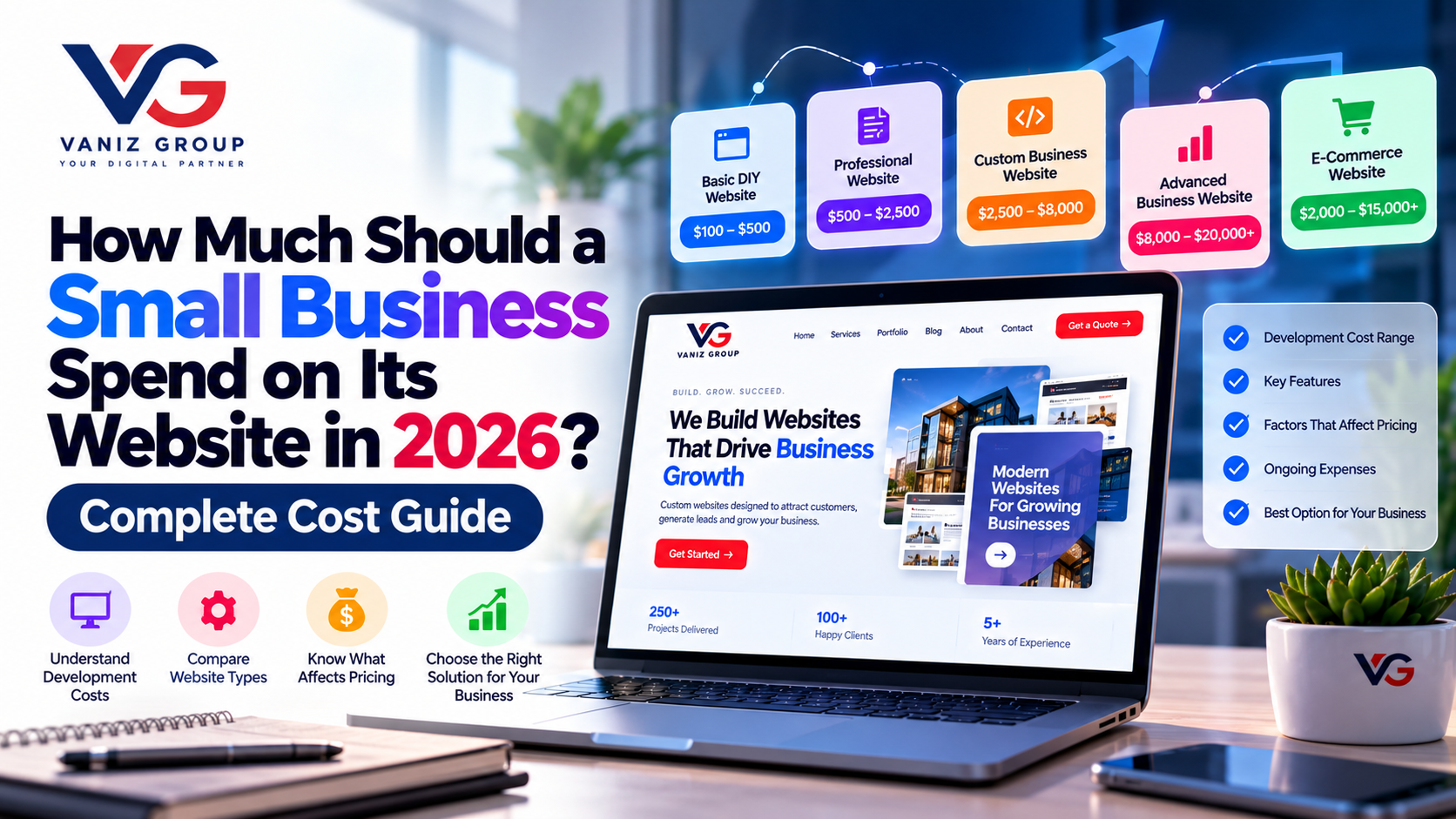
Website vs Mobile App Development Cost
Development costs vary significantly depending on complexity.
Website Development
A basic business website may cost approximately:
$1,000–$5,000
A custom business website with advanced functionality may cost:
$5,000–$20,000+
E-commerce, SaaS, portals, integrations, and custom workflows can increase the cost substantially.
Mobile App Development
A basic mobile application may cost approximately:
$10,000–$25,000
A medium-complexity application may cost:
$25,000–$60,000
An advanced application can cost:
$60,000–$150,000+
These are broad planning estimates, not fixed prices. The final cost depends on features, platforms, integrations, UI/UX complexity, backend requirements, security, and development scope.
How to Decide What Your Business Needs
Before choosing a website or mobile app, answer these questions.
1. How Do Customers Find You?
If customers primarily discover businesses through Google, search visibility should be an important consideration.
2. How Frequently Do Customers Use Your Service?
If customers visit once or twice a year, an app may not provide enough value.
If customers interact with you several times a week, an app can become much more valuable.
3. Do You Need Push Notifications?
If notifications are central to your customer experience, a mobile app may be useful.
4. Do You Need GPS or Device Features?
Location tracking, camera functionality, biometrics, Bluetooth, and similar requirements may favor an app.
5. Do You Need Customer Acquisition or Retention?
A website is generally strong for acquisition and discovery.
A mobile app can be particularly useful for retention and repeat engagement.
6. What Is Your Budget?
You don't necessarily need to build everything at once.
A phased approach can reduce initial investment.
A Smart Digital Strategy for Startups
Instead of immediately spending a large budget on both platforms, startups can build in phases.
Phase 1: Website + Backend
Build:
Professional website
Business pages
SEO foundation
Lead generation
Backend/API architecture
Phase 2: Validate the Business
Measure:
Website traffic
Leads
Customers
Conversion rate
User behavior
Product-market fit
Phase 3: Build Mobile Application
Once the business model is validated, develop:
Android app
iOS app
Customer dashboard
Notifications
Personalized features
Mobile-specific functionality
Phase 4: Add Advanced Technology
Later you can introduce:
AI
Automation
Personalized recommendations
Analytics
Loyalty
Advanced integrations
This approach can reduce risk while allowing the product to grow over time.
Examples: Website or App?
Business Type | Website | Mobile App |
|---|---|---|
Software Company | ✅ Essential | Optional |
Restaurant | ✅ Recommended | Optional |
Food Delivery | ✅ Recommended | ✅ Strongly Recommended |
Hotel | ✅ Essential | Useful |
Healthcare Platform | ✅ Essential | ✅ Recommended |
E-Commerce | ✅ Essential | Useful |
Taxi Platform | ✅ Useful | ✅ Essential |
SaaS Product | ✅ Essential | Depends |
Online Learning | ✅ Recommended | ✅ Useful |
Social Network | Useful | ✅ Essential |
Real Estate | ✅ Essential | Useful |
Salon | ✅ Recommended | Optional/Useful |
Marketplace | ✅ Essential | ✅ Recommended |
Local Service Business | ✅ Essential | Usually Optional |
Common Mistakes Businesses Make
Building an App Before Validating the Idea
A mobile app can require significant investment. If the business model hasn't been validated, starting with a website or MVP may be more practical.
Building Only a Website When Customers Need an App
If customers frequently interact with your platform, a website alone may eventually limit engagement.
Ignoring Mobile Experience
Even when you only need a website, it should provide an excellent mobile experience because many users access websites from smartphones.
Building Too Many Features
Start with the features that solve the most important customer problem.
Additional functionality can be introduced after launch.
Choosing Technology Before Defining Requirements
Technology should support the business requirements rather than determine them.
The Best Approach: Think About Your Business, Not the Technology
The most important question isn't:
“Should I build a website or mobile app?”
Instead, ask:
“What digital experience will help my customers and business achieve the desired outcome?”
For some businesses, a website is enough.
For others, a mobile application is essential.
For growing digital businesses, the strongest long-term strategy may be to build a website and mobile app connected to the same scalable backend.
Final Thoughts
A website and mobile app serve different purposes, and neither is automatically better than the other.
A website is usually the better starting point for search visibility, business credibility, customer acquisition, content, and lead generation.
A mobile app becomes more valuable when your business depends on frequent customer interaction, personalized experiences, notifications, location services, loyalty programs, or device-specific functionality.
For many businesses, the ideal strategy is to start with a strong website and scalable backend, validate the business model, and then introduce a mobile application when customer demand justifies it.
Build Your Website or Mobile App With Vaniz Group
Vaniz Group helps startups and businesses design and develop custom websites, web applications, mobile applications, APIs, SaaS platforms, and business software.
Whether you need a simple business website, a high-converting web platform, a customer mobile app, or a complete digital ecosystem, the right solution should be designed around your business goals.
Have a website or mobile app idea? Contact Vaniz Group to discuss your requirements and find the right development approach for your business.